
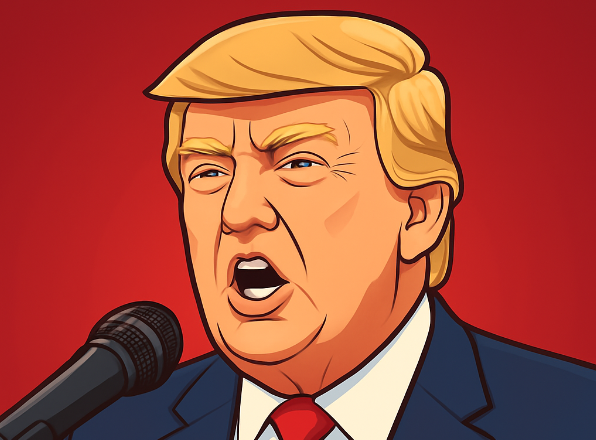
The rise of artificial intelligence has transformed nearly every corner of digital life—how we write, how we create, how we communicate, and even how we joke around online. But among all the trends that have come and gone, few have exploded as wildly as the Trump AI generator phenomenon. Whether it’s political satire, comedic skits, TikTok parodies, or YouTube creators producing funny conversations between fictional versions of politicians, the demand for hyper-realistic Trump voice generator tools keeps growing at incredible speed.
What started as a niche experiment in synthetic speech has turned into a cultural wave. People are using AI-generated Trump voices to narrate gaming videos, deliver roast-style commentary, and recreate fictional debates. Businesses are using the voice for marketing hooks. Meme pages are using it for punchlines. Even creators who have nothing to do with politics are using a Trump AI voice generator simply because the tone, rhythm, and personality are instantly recognizable.
But behind all the jokes and trends, there’s a deeper layer worth understanding—how it works, why it became such a huge trend, and what it means for the future of voice technology.
Why Trump’s Voice Became the Most Popular AI voice
Even if someone has no interest in politics, they probably know what Donald Trump sounds like. His speech style is iconic—short punches of words, a charismatic tone, exaggerated emphasis, and a rhythm that is easy for AI models to learn and reproduce.
That’s why the Trump AI generator is one of the most requested voice models on the internet today. The voice is energetic, recognizable, and naturally suited to humor. Most synthetic voices sound neutral or robotic, but Trump’s style has emotion built into it. That’s part of what makes AI versions of his voice sound more convincing than many other public figures.
Creators realized quickly: if you take a normal video and add a Trump-style narration, it instantly becomes entertaining.
And that’s how the trend started. One funny clip becomes another. One TikTok becomes a series. One YouTuber uses the voice for gaming commentary, another uses it for fake motivational speeches. Before long, the Trump voice generator became a category of its own.
How the Trump AI Voice Generator Works
AI voice generators are built on speech synthesis models. They analyze hours of audio to learn tone, pace, pronunciation, and emotional delivery. But with Trump, the model doesn’t need to work as hard as with a calm or subtle speaking style. His delivery already has sharp edges and strong patterns, which makes imitation easier.
A Trump AI voice generator typically does the following:
- Learns his speech patterns
The AI studies word emphasis, pacing, pauses, and tone shifts. Trump often speaks in short, punchy sentences, which makes the model more accurate. - Analyzes his vocabulary style
Trump uses certain phrases repeatedly—“believe me,” “tremendous,” “we’re doing great,” “nobody knows this better than me.” The model naturally picks these up. - Creates a response using text-to-speech
Once you type your text into a generator, the AI recreates his voice with those learned speaking styles. - Adds emotional inflections
Some modern generators even add sarcasm, enthusiasm, or dramatic pauses automatically.
Read More: Donald Trump Net Worth 2025: Biography, Age, Family, Career & Lifestyle
Combined, this results in a voice that sometimes sounds so real that listeners can barely tell the difference.
Creative Uses of Trump AI Generators
The popularity of these tools didn’t grow just because the technology improved; it grew because creators found endless ways to use them.
Here are the most common:
Comedy Skits
People love making Trump narrate absurd scenarios—like giving cooking advice, reviewing games, or arguing with fictional characters. It’s easy to write something funny and let the AI voice do the rest.
Gaming Commentary
This is one of the biggest trends. Gamers use a Trump AI voice generator to narrate highlights, call out opponents, or roast their friends. The tone fits gaming culture perfectly.
Short-Form Content
TikTok and Reels thrive on fast, punchy soundbites. The Trump voice adds humor instantly and keeps viewers engaged.
Educational or Explanatory Videos
Surprisingly, some creators use the voice to keep serious content entertaining. A tutorial narrated by “Trump” keeps people watching longer, even if the topic is boring.
Marketing Hooks
Small businesses sometimes use the voice in ads or social media posts—not to imitate Trump’s political opinions, but to add memorable humor. The voice stands out, and people remember it.
Memes
Of course, memes are the backbone of internet culture. And Trump’s voice—real or AI—is meme fuel by default.
The Ethical Line: Where Entertainment Meets Reality
The popularity of Trump AI voice generators also raises questions about ethics and authenticity. While most people use the voice for comedy or harmless fun, the line can blur when AI-generated audio is used in political or misleading contexts.
The key issue isn’t the technology—it’s how people choose to use it.
Here are the main ethical points:
- Parody is generally harmless and clearly recognizable as entertainment.
- Deepfakes used to mislead can cause misinformation and public confusion.
- Creators should be transparent when the voice is AI-generated.
- Platforms may introduce labels to help identify synthetic content in the future.
AI voices are a powerful tool, and like any tool, they can be used responsibly or irresponsibly. The trend is fun, but it requires awareness too.
Why People Prefer Using Trump’s Voice Over Other AI Voices
What sets the Trump AI generator apart is its emotional expressiveness. Most AI voices sound flat or overly clean. Trump’s voice has character—lots of character.
Here’s why creators love using it:
- It’s instantly recognizable
- It turns simple lines into humor
- It has rhythm and energy
- It exaggerates words naturally
- It sounds more “alive” than typical robot voices
Even if someone is not a fan of Trump in real life, the comedic potential of the voice is undeniable.
The Future of AI Voice Technology
The technology behind the Trump AI voice generator is just the beginning. As models grow more advanced, we may reach a point where almost any voice can be recreated instantly—even fictional characters or completely new voices that never existed.
Possible future developments:
- Real-time voice conversion
- Hyper-realistic emotional expressions
- Custom celebrity-style voices
- Voice clones built for content creators
- Tools that understand personality, not just speech
The Trump trend is simply the loudest example of a much bigger movement.
In the next few years, creators may not just use AI voices—they may build entire personalities, characters, and digital identities using nothing but text and audio synthesis.
Conclusion
The explosion of interest in Trump AI generators, Trump voice generators, and Trump AI voice generator tools shows how quickly the internet embraces new creative possibilities. What started as a simple experiment grew into a global trend because the voice is funny, expressive, and instantly recognizable.
While the technology carries responsibilities and ethical considerations, its creative potential is enormous. From humor to storytelling, from marketing to entertainment, AI voices are reshaping how people communicate online. And among all the voices shaping this new chapter, the Trump voice stands out as one of the most widely used—and undeniably one of the most entertaining.
If this pace continues, AI voices won’t be just a trend. They’ll become one of the main tools of modern digital expression.